Access

Access

Access means different things to different people; this section looks at the institutional barriers that may inhibit or prevent access to exhibitions.

We are working on replacing this Resource topic with an Accessible Exhibition Making Resource Hub to reflect current best practice. We expect this to be published in May 2026.

Access means different things to different people; this section looks at the institutional barriers that may inhibit or prevent access to exhibitions. Access is the responsibility of both the organiser and the venue. Organisers have a moral responsibility to make their exhibitions as accessible as possible, just as venues have a legal responsibility to make their buildings accessible. However, organisations need to buy into the principle that they should be making all of their work as open and inclusive as possible. Once this principle is adopted, it will gradually filter through all aspects of the organisation’s work. This philosophy will affect how exhibitions and/or the venue are perceived and this, in turn, will affect visitor perceptions and figures. Adopting an inclusive approach will influence the selection of exhibits, staffing and marketing. If, for example, your staff is diverse, then the range of exhibits and support materials offered will automatically broaden to reflect their tastes and interests. This will in turn help to attract a wider audience as you will be demonstrating your openness.

For the organiser, a touring exhibition provides an opportunity and an obligation to present a model of excellence, either in presentation or in the subject covered. For the venue, a touring exhibition provides a chance to explore an area it might not otherwise cover. By buying in an exhibition you are also acquiring expertise and experience which will be invaluable to developing a wider audience base. With careful selection, touring exhibitions can be chosen that appeal to different ethnic groups, people of different ages and different social groups. Working with the organiser, the venue can develop a greater understanding of the themes explored in the exhibition, to help develop a supporting learning or communications strategy to target a specific audience. Organisers and venues alike should consider the following:

  • Programme or devise exhibitions which will appeal to different interest groups or people from different cultural groups
  • Organise focus groups from different sections of the community, and ask them to suggest the exhibitions they would like to see and, more importantly, how they would like to see them promoted
  • Accept that it takes a long time to change your audience profile, but commit yourself to doing so
  • Collaborate with local community groups and invite them to get involved with the exhibitions
  • Provide training and support to all staff so that they feel confident and accepting about the organisation’s desire to be more accessible

1. Access: physical barriers

In discussions about access, we often focus on people with physical disabilities. However, buildings and exhibition spaces with physical barriers can be just as obstructive or restrictive to other people, e.g. mothers with pushchairs or elderly people. Since the change of legislation of 2010, public spaces are now legally obliged to make their buildings accessible under the Equality Act. Things to consider to ensure your exhibitions are physically accessible include:

  • Removing all stepped access to the exhibition, or providing an alternative route
  • Making clear definitions between surfaces e.g. between white walls and black floors, or by placing a line of tape around the base of a plinth. Partially sighted people, and indeed small children, require clear distinctions between surfaces, which may otherwise become hazards
  • Limiting the noise caused by floor surfaces, air conditioning, or sounds from outside. If people are using hearing aids or if they have limited hearing, any additional noise pollution can make it extremely hard to hear. It may be appropriate to have a hearing loop installed
  • Entrances should have a minimum width of 1800mm; there should be a minimum of 2000mm around exhibits, plinths, display cases etc. to allow wheelchairs to turn. Ideally, the route around exhibits should be no narrower than 3600mm to allow two wheelchair users to turn or pass
  • Ensuring that all text used in the exhibition is no smaller than 18 point with titles no smaller than 24 point and handouts no smaller than 12 point. This is not only of benefit to partially-sighted visitors but also to the elderly. It may be appropriate to make large print guides available
  • Making sure that the lighting does not create glare or strong shadows, as this can be very distracting to partially-sighted visitors
  • Placing seats or benches around the exhibition; as well as encouraging people to stay longer, this will be of great benefit to the elderly or those with limited mobility
  • Hanging exhibits and text panels so that their mid-point is 137cm from the floor where dimensions allow; this is an optimum height that allows easy viewing for all, including children and people in wheelchairs. The same principle of optimum height should be followed for plinths, showcases and interactive exhibits

2. Access: psychological barriers

Even though buildings and exhibitions may comply with current equality legislation for physical access, they may still exclude people psychologically. Traditionally, exhibitions have been the preserve of the white middle classes, but this view of British society is no longer tenable. Attracting the widest range of people to an exhibition is a fundamental aim. Traditional gallery and museum spaces are intimidating to the uninitiated. There are unspoken rules – don’t talk, don’t touch, don’t run. There is an unwritten etiquette – how to look at exhibits, how to comment on them, etc. – which is extremely off-putting if you are not familiar with it.Both organiser and venue should strive to demonstrate that the exhibition and the venue are open to all, regardless of race, age or ability. The following examples aim to demonstrate inclusivity:

  • Consider how you are presenting your exhibition or your venue through your marketing materials. Is the image selected a good representation of what you are trying to achieve? For example, if you are looking to attract a family audience, then a stark, minimalist image of a single object is probably not the right choice
  • Provide support materials to the exhibition, such as books or artefacts to handle etc. This will enable visitors to get a deeper understanding of the exhibition, and also provides alternative learning methods. Touch panels of materials linked to the exhibits are great for children and very helpful for blind or partially sighted visitors
  • Provide a family sheet linked to the exhibition, with related games and activities
  • Provide a pen and paper at reception to enable people with hearing difficulties to write if they need to. Remember to include a sign to let people know these materials are available and make sure that the reception staff are aware of this service
  • Make sure that all texts are written in a simple and informative style. Accessible writing does not mean ?dumbing down?. It can just mean avoiding industry jargon
  • Provide large print versions of all text. This can be done simply by enlarging the original text on a photocopier or a computer, but do make sure to publicise the fact that this is available
  • Consider languages other than English for the exhibition text. If you have a large Chinese population in your area, it would be worth investing in a translation of the texts in Mandarin or Cantonese. To mitigate against the expense of doing this for every exhibition, perhaps one generic introduction to the exhibition programme would suffice
  • Consider providing a Braille version of the exhibition text. The National Library for the Blind offers a Braille translation service at very reasonable costs.
  • Consider providing audio-recordings of the exhibition texts so that they are available for the visually impaired. This can be simply done by a staff member.

Written by Sonja Kielty (2015)

Join Our Newsletter

Join our mailing list and get all the latest news sent directly to your inbox.

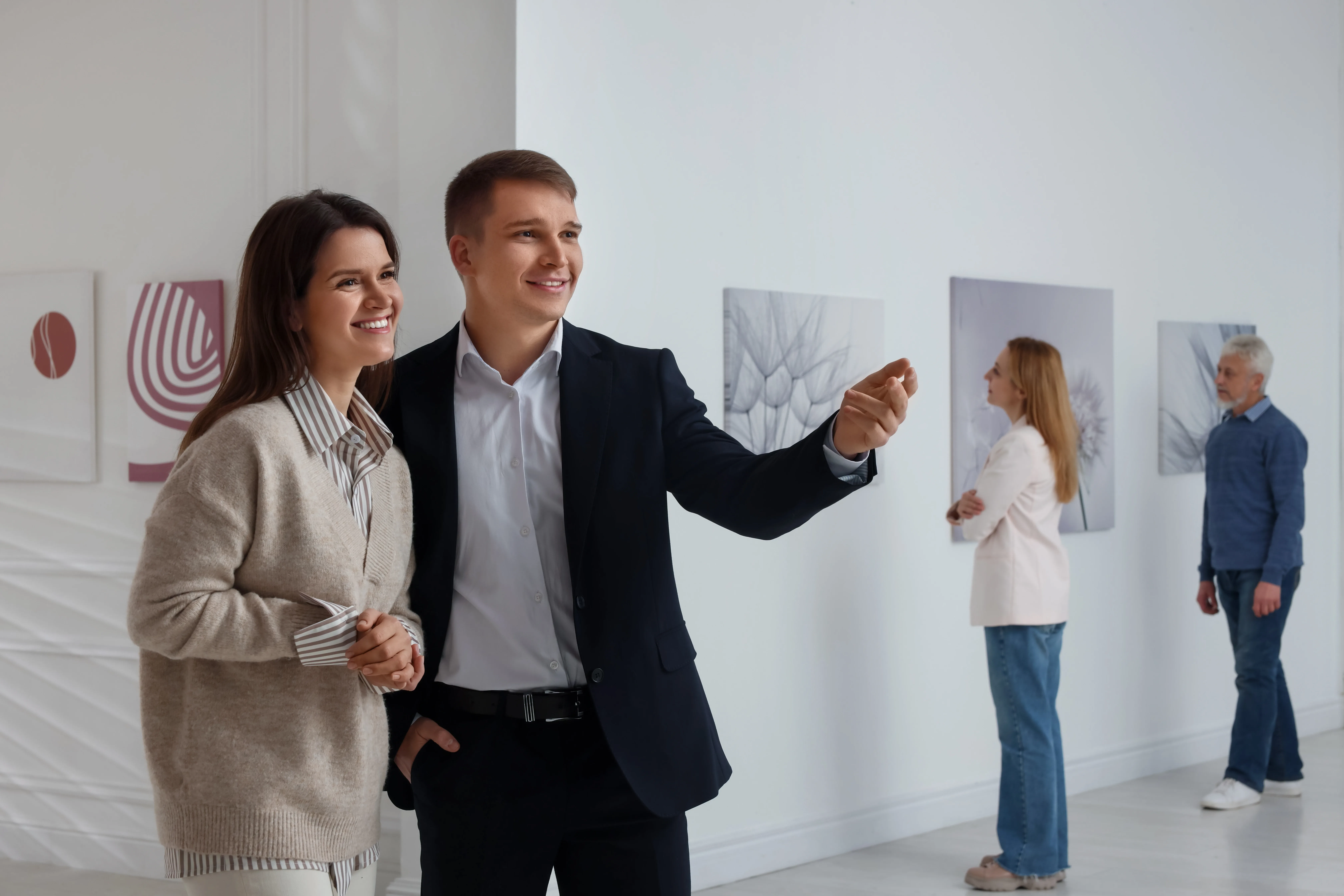
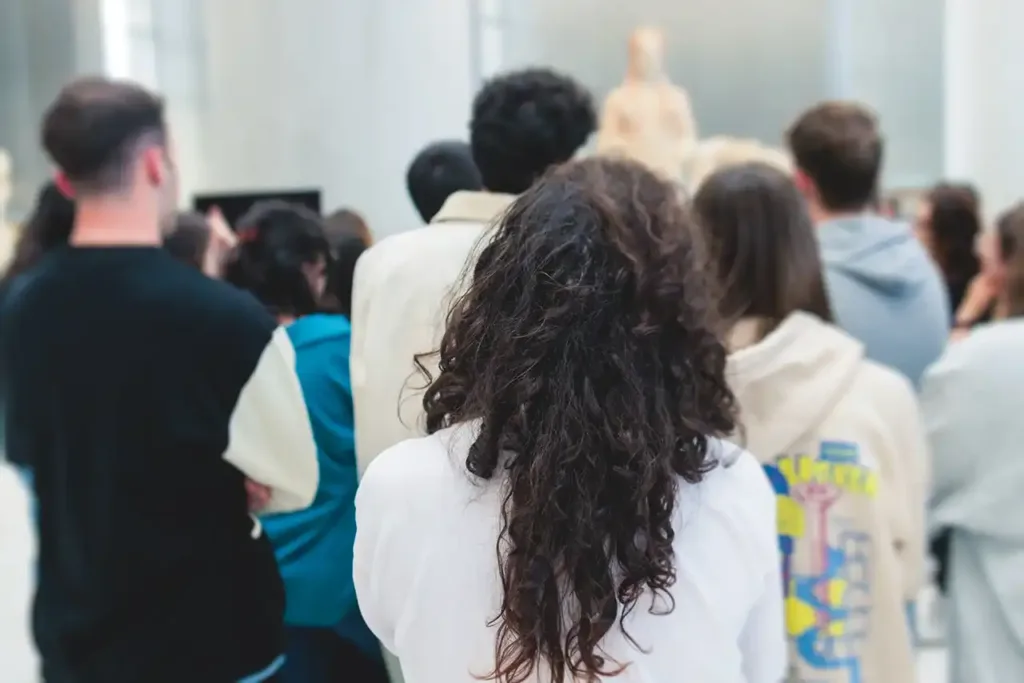
Group of students on excursion visit gallery museum with tour guide, a docent with a tourist adult visitors on archaeology exhibition with contemporary art, paintings and exhibits
Privacy

The Exhibitions Group website uses cookies to help us provide the best user experience possible. Find out more about the information we collect in our Privacy Policy.