Join Our Newsletter
Join our mailing list and get all the latest news sent directly to your inbox.
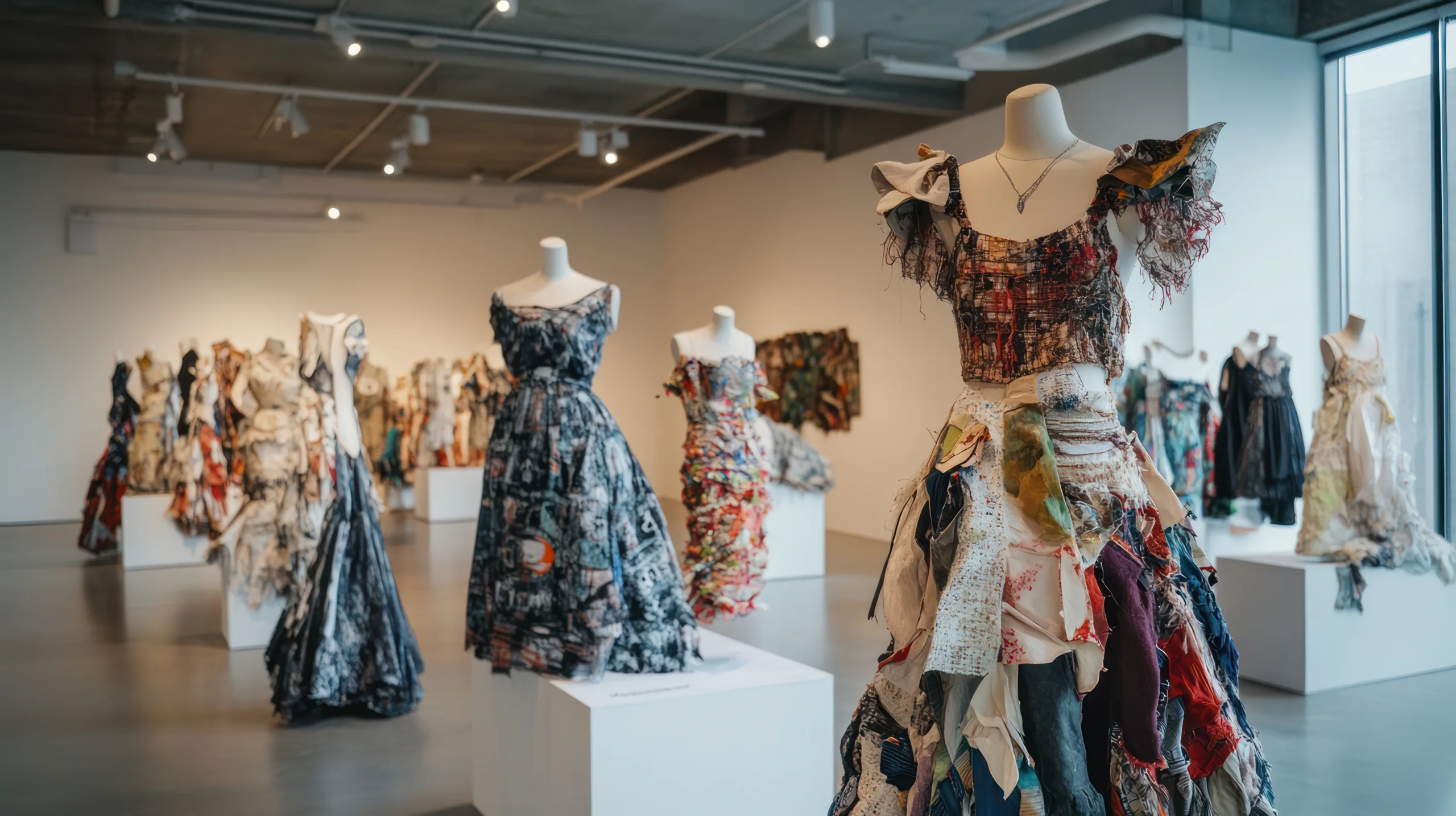
This collection of resources and toolkits to reduce environmental impact is specifically relevant to exhibition making and touring.
This collection of resources and toolkits to reduce environmental impact is specifically relevant to exhibition making and touring.
If you know of any resources and toolkits that specifically support sector colleagues working to reduce the environmental impact of exhibitions and touring that we have not included here, please let us know by emailing seminars@teg.org.uk
GCC (Gallery Climate Coalition) has updated their Carbon Calculator and added a Quick Calculator. For more detailed reporting, the GCC Carbon Calculator provides comprehensive insights, while the Quick Calculator offers a rapid assessment of your carbon footprint, ideal for preliminary evaluations or quick insights. Both elements are designed to help you understand and manage your environmental impact effectively.
GCC resources include information on best practice, research and case studies. The GCC Carbon Calculator is the tool recommended by TEG for calculating exhibition-specific outputs, and their Decarbonisation Action Plan for non-profits and institutions has been developed to support anyone within the public or non-profit visual arts sector who feels determined to take urgent and effective climate action, in line with principles of justice and the latest climate science.
GCC’s carbon calculator has been adopted by the Bizot Group, making it the best tool for the UK sector to work with and remain in step with international colleagues.
The Exhibitions Group recommends that exhibition colleagues use Julie’s Bicycle tools for measuring venue outputs (i.e. buildings, HVAC etc.), to use the STiCH calculator for materials, and to use the Gallery Climate Coalition (GCC) tools for exhibition-specific outputs.
Sustainability Tools in Cultural Heritage (STiCH) is a life cycle assessment (LCA) Carbon Calculator and Library of Case Studies and Information Sheets developed to help cultural heritage professionals make educated, sustainable choices to lower the environmental impact of their work. STiCH also provides a Life Cycle Assessment of Museum Loans and Exhibitions
Not sure how to start adopting more sustainable practices when working on exhibitions? For many of us, especially when working in collaboration with stakeholders on a complex touring exhibition, it can feel daunting so in partnership with Art Fund and the Design Museum, we’ve created a new toolkit to help you.
The Rethinking Touring Exhibitions toolkit supports sector professionals and volunteers to ask the right questions at the right time. It signposts a variety of resources to help teams gather data and access further research to make informed decisions. And although this was created for UK organisations developing or co-producing touring exhibitions, it can be adapted for other types of projects too.
This toolkit has been developed in partnership with Art Fund the Design Museum and has been produced as part of Going Places, an Art Fund programme made possible with support from the National Lottery Heritage Fund and additional support from Esmée Fairbairn Foundation.
Julie’s Bicycle’s resource hub offers practical tools and support, including guides, case studies, research, webinars and podcasts.
Julie’s Bicycle’s Productions and Exhibitions Guide covers the key delivery stages and will map out sustainable actions you can make from conception to take down, covering design, construction, furniture, props, lighting and sound. It is for anyone involved in producing or designing events and exhibitions.
The Design Museum’s Impact Guide and Impact Model for designing exhibitions with a lower environmental impact includes the Objects Decision Tree and Materials Decision Tree. The guide is also available in Arabic, Chinese, French, Russian and Spanish.
CiMAM (International Committe of Museums and Collections of Modern Art) Toolkit on Environmental Sustainability in the Museum Practice 2021
This guide is for anyone who works with interpretation – curators, designers, architects, educators, funders, community partners, or simply audiences curious about how exhibitions and cultural programmes come to life. Every choice in interpretation, whether about materials, design, or storytelling, has an impact. This guide will help improve those choices. With practical tools, creative prompts, and real examples, it encourages a shift from doing less harm to doing more good. This guide is for anyone who believes culture can be a force for renewal, care, and imagination
This guide was made possible with the support of the National Lottery Heritage Fund.
The guide is available in English and Welsh.
Museums and Heritage Highland’s Climate Action Toolkit developed with Ki Culture
NEMO (Network for European Museum Organisations) 7 tips for advocating the sustainable transition of your museum
Climate Protection in Museums guidelines.
The Sustainability Rider by LFCP is a tool for both employed staff and freelancers to negotiate better sustainability practices in cultural heritage. It is available in English, Spanish, German and French.
HERIE is a conservation risk tool developed and made available by the Cultural Heritage Research Group of the Jerzy Haber Institute of Catalysis and Surface Chemistry, Polish Academy of Sciences.
Bristol+Bath Creative R+D has a Creative Climate Action Tool Kit for small creative businesses, SMEs, freelancers, and organisations to support their climate action journey. The took kit includes a video, worksheet, checklist. Use the worksheet to map your work and business needs and use the checklist to research further.
Circular Economy Networks Research Project Report (April 2024)
Arts Council England commissioned Social, Environmental and Economic Solutions (SOENECS) to research circular economy activities and networks within the creative and cultural sector.
The goal of this piece of research was to explore the opportunities for reduction in single-use consumption through circular economy networks within the creative and cultural sector. It also aimed to understand what circular economy activities and networks already exist within the sector, and how they could be supported and expanded further.
The report explores many areas relevant to exhibition making, including loans, logistics, design and build, storage, transport etc.
Seeds for Action: In Focus Lightning Talks, hosted by Museums Development North. This is a series recordings of thematic workshops focusing on how museums can build connections to support climate work. Seeds for Action forms part of Roots & Branches: Carbon Literacy & Climate Action, an environmental responsibility programme delivered by Museum Development North for Museum Development England 2024-2026.
This collection of resources and toolkits to reduce environmental impact is specifically relevant to exhibition making and touring.
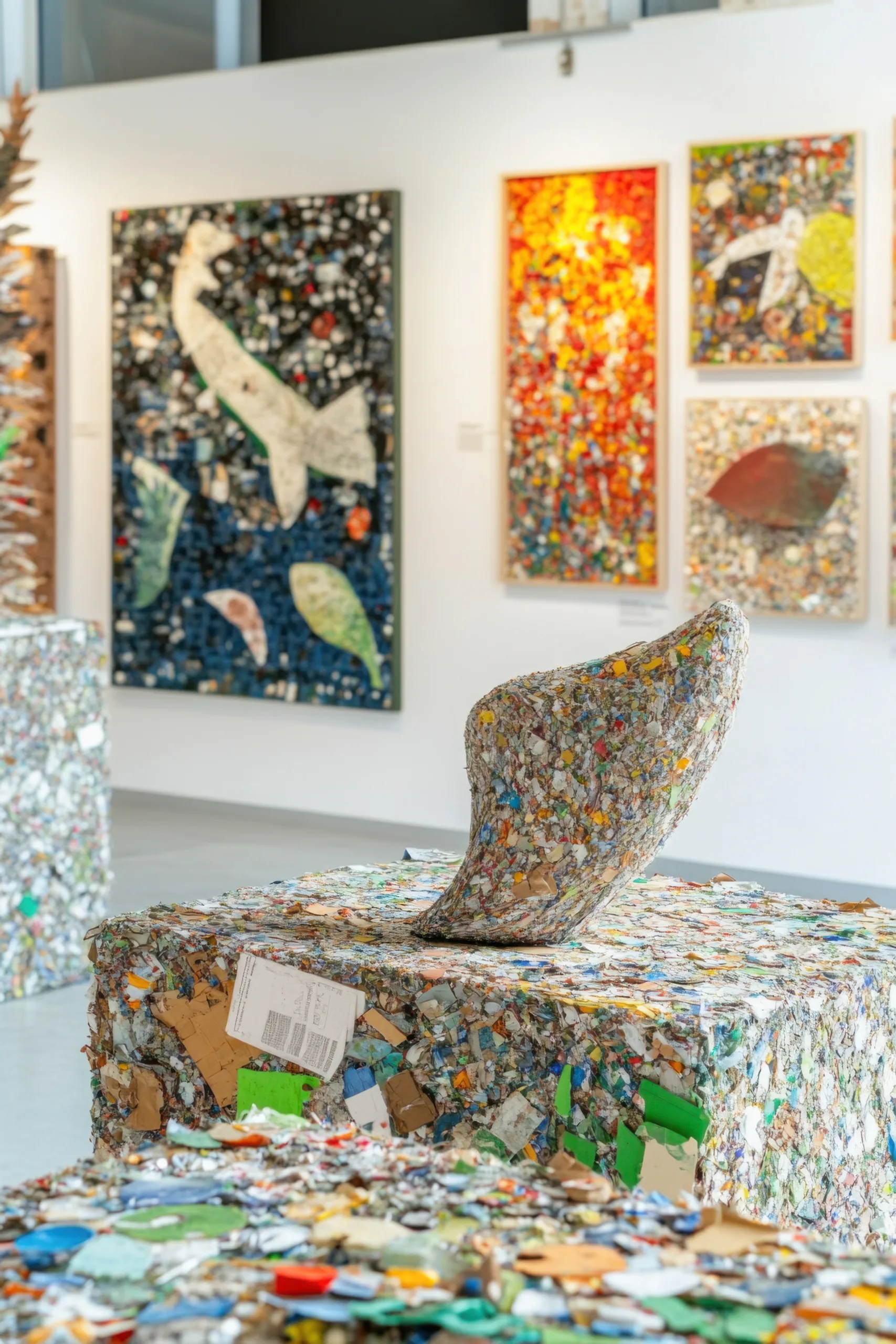
This collection of policies and guidelines to reduce environmental impact is specifically relevant to exhibition making and touring.

Links to relevant books to help inform and support exhibition makers working to reduce the environmental impact of their work.
Join our mailing list and get all the latest news sent directly to your inbox.